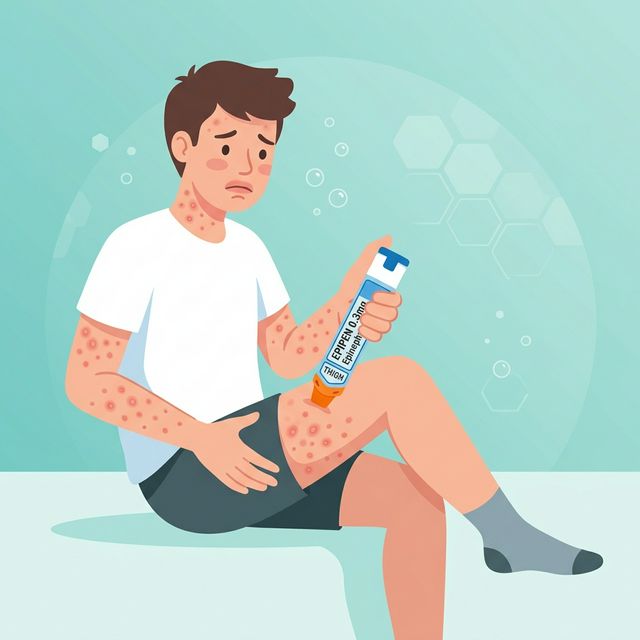
Anaphylaxis — Severe Allergic Reaction
A life-threatening allergic reaction that requires immediate epinephrine and emergency care.
A life-threatening allergic reaction that requires immediate epinephrine and emergency care.
Use an EpiPen immediately if available and call 911/112. Anaphylaxis causes swelling of the airway, a dangerous drop in blood pressure, and can be fatal within 15 minutes.
Hives, swelling (face, lips, throat), difficulty breathing, wheezing, rapid pulse, dizziness, nausea/vomiting, or loss of consciousness.
If the person has an EpiPen, use it immediately. Remove the safety cap, press firmly against the outer thigh (through clothing is OK), and hold for 10 seconds.
Call 911/112 even if epinephrine is administered. The reaction can come back (biphasic reaction). A second dose may be needed after 5–15 minutes.
If breathing is difficult, help them sit upright. If they feel faint or dizzy, lay them on their back with legs elevated. If vomiting, place on their side.
Stay with them. Be prepared for a second reaction. If they stop breathing, begin CPR immediately.