Severe Bleeding Control
Stop life-threatening blood loss with direct pressure and proper wound management.
Stop life-threatening blood loss with direct pressure and proper wound management.
Call 911/112 immediately. A person can bleed to death in as few as 5 minutes from a severe wound. Apply pressure immediately — don't wait for help to arrive.
Put on gloves if available. Protect yourself from bloodborne pathogens. If no gloves, use a plastic bag or multiple layers of cloth.
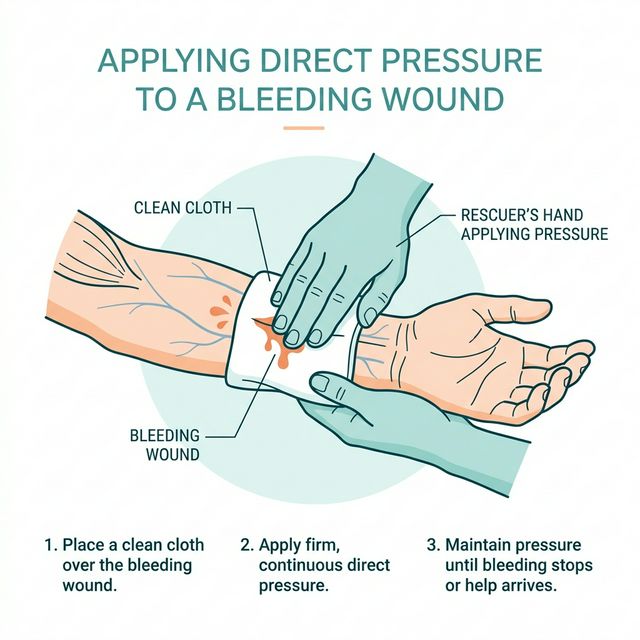
Use a clean cloth, bandage, or clothing and press firmly on the wound. Apply steady, continuous pressure with both hands if needed.
If the cloth soaks through, add more layers on top. Removing it disrupts clot formation and increases bleeding.
If possible, raise the injured area above the level of the heart to slow bleeding. Keep the person lying down.
For life-threatening limb bleeding that can't be controlled with pressure, apply a tourniquet 2–3 inches above the wound. Note the time it was applied.
Watch for pale skin, rapid breathing, confusion, or unconsciousness. Keep the person warm and calm until help arrives.