CPR — Cardiopulmonary Resuscitation
Life-saving technique when someone's heart stops beating or they stop breathing.
Life-saving technique when someone's heart stops beating or they stop breathing.
Call 911 / 112 before starting CPR. If someone else is present, ask them to call while you begin chest compressions. Every second counts — brain damage can begin within 4–6 minutes without oxygen.
Tap the person's shoulders firmly and shout "Are you okay?" Look for signs of breathing — chest rise, sounds, or air from the nose/mouth.
Call emergency services (911/112) or ask someone nearby to call. Ask for an AED (Automated External Defibrillator) if available.
Place the person on their back on a firm, flat surface. Kneel beside them at chest level.
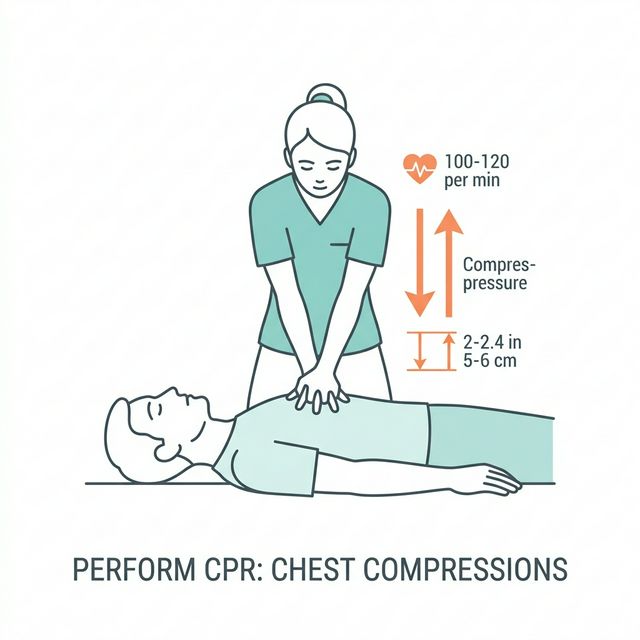
Place the heel of one hand on the center of the chest (on the breastbone). Place your other hand on top and interlace fingers. Push hard and fast — at least 2 inches deep — at a rate of 100–120 compressions per minute.
After 30 compressions, tilt the head back, lift the chin, pinch the nose shut, and give 2 breaths — each lasting about 1 second. Watch for chest rise.
Repeat cycles of 30 compressions and 2 breaths. Do not stop unless the person starts breathing, an AED is available, or professional help takes over.