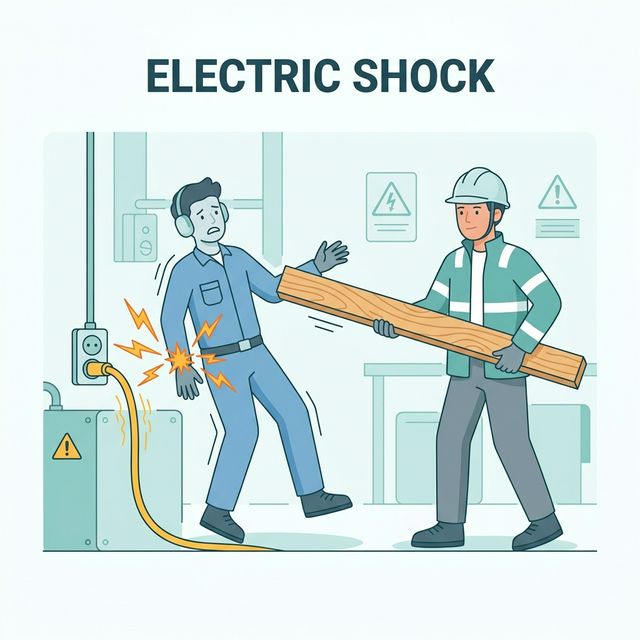
Electric Shock — Electrocution Response
How to safely respond when someone is injured by electric current.
How to safely respond when someone is injured by electric current.
Electricity can travel through the victim's body to you. Turn off power at the source, unplug the device, or use a dry wooden or plastic object to separate them from the current. Call 911/112 immediately.
Do NOT touch the person if they are still in contact with the power source. Stand on a dry surface. For high-voltage lines, stay at least 20 feet away and call the power company.
Turn off the power at the circuit breaker, fuse box, or unplug the appliance. If you cannot disconnect, use a dry wooden broom handle, rubber mat, or plastic object to push the person away from the source.
Call 911/112 immediately. All electrical injuries need medical evaluation — internal damage is often worse than external burns suggest.
If the person is not breathing or has no pulse, begin CPR immediately. Electrical shock can stop the heart.
Cover electrical burns with a sterile, non-stick bandage. Do not apply water or ointments. Look for two burn marks — entry and exit wounds.
Keep the person lying down, warm, and still. Watch for pale skin, rapid pulse, confusion, or loss of consciousness. Elevate legs unless spinal injury is suspected.