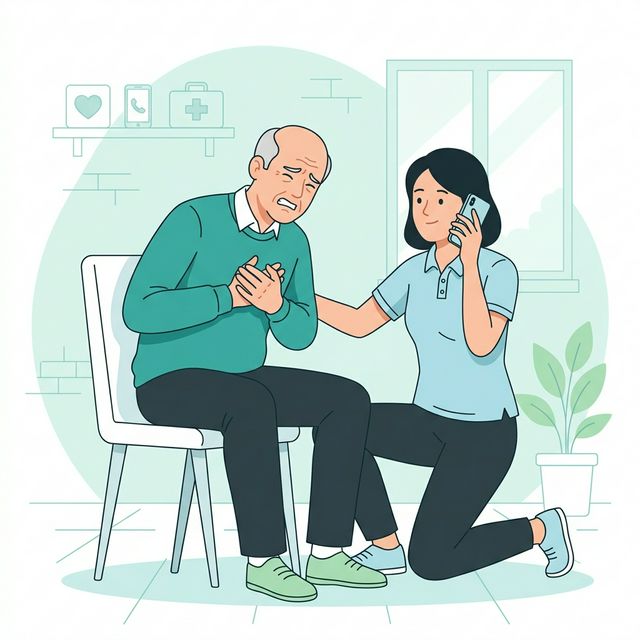
Heart Attack Response
Recognize the signs and act quickly to save a life during a cardiac emergency.
Recognize the signs and act quickly to save a life during a cardiac emergency.
Call 911/112 at the first sign of a heart attack. Do not drive the person to the hospital yourself — paramedics can begin treatment on the way.
Chest pain or pressure (may radiate to arm, jaw, or back), shortness of breath, cold sweat, nausea, lightheadedness. Women may experience atypical symptoms like fatigue and stomach pain.
Call 911/112 immediately. Tell them you suspect a heart attack. Stay on the line for instructions.
Help the person sit in a comfortable position — semi-upright with knees bent (the "W" position). Loosen any tight clothing.
If the person is not allergic to aspirin and has no contraindications, give them one regular aspirin (325mg) or four baby aspirin. Have them chew it slowly.
Stay with them and monitor their breathing. If they become unresponsive and stop breathing, begin CPR immediately.