Seizure — Epilepsy Response
How to safely support someone during a seizure and protect them from injury.
How to safely support someone during a seizure and protect them from injury.
Most seizures end on their own within 1–3 minutes. Call emergency services if it lasts more than 5 minutes, the person doesn't regain consciousness, is injured, or has a seizure for the first time.
Do not panic. Time the seizure from the moment it starts. Most seizures end on their own within a few minutes.
Move sharp objects, furniture, or anything dangerous away from the person. If they are standing, gently guide them to the ground.
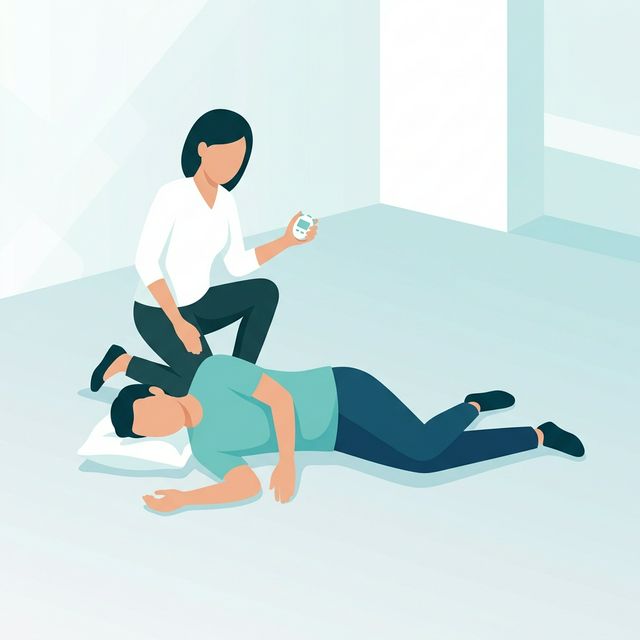
Place something soft (jacket, towel, pillow) under their head to prevent head injury. Do not hold them down or try to stop the movements.
Once the convulsions stop, gently roll them onto their side (recovery position) to keep the airway clear and prevent choking.
The person may be confused, drowsy, or emotional after the seizure. Stay with them, speak calmly, and explain what happened when they are alert.