Stroke — F.A.S.T. Recognition
Recognizing stroke symptoms and acting fast can save lives and prevent brain damage.
Recognizing stroke symptoms and acting fast can save lives and prevent brain damage.
Call 911/112 immediately if you suspect a stroke. Treatment within the first 3 hours can dramatically reduce long-term damage. Note the time symptoms first appeared.
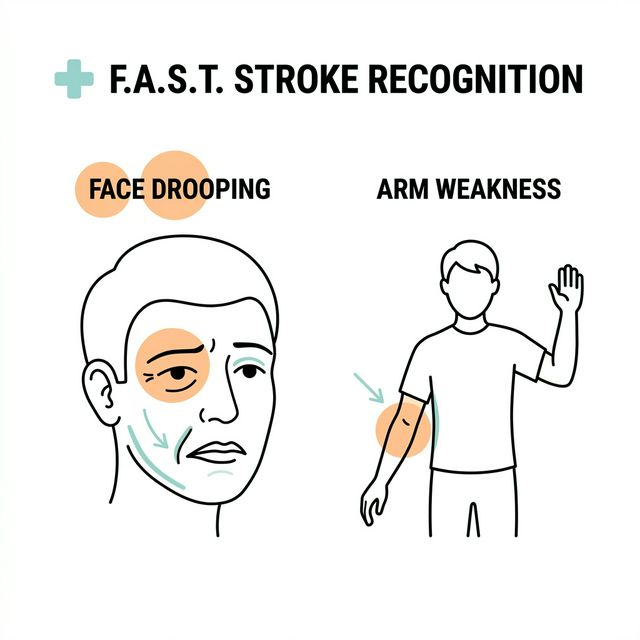
Ask the person to smile. Does one side of the face droop or feel numb? An uneven smile is a warning sign.
Ask the person to raise both arms. Does one arm drift downward? Inability to raise one arm is a critical indicator.
Ask the person to repeat a simple sentence. Is their speech slurred, garbled, or hard to understand?
If you observe ANY of these signs, call emergency services immediately. Note the exact time symptoms started — this is critical for treatment decisions.
Help them lie down with their head slightly elevated. Loosen any tight clothing around the neck.
Watch their breathing carefully. If they become unconscious and stop breathing, be prepared to begin CPR.
Do not give food, water, or medication. Their swallowing reflex may be impaired.